Dundee Magazine arrives at a pivotal moment for Scotland's fourth-largest city. With a population of 149,880 and a history stretching back to its royal burgh status in 1292, Dundee stands as a city transformed: from the jute capital of the world to the UK's first UNESCO City of Design, recognised in 2014 for its contribution to creativity and innovation.
Why Dundee Needs a Local Magazine
Local journalism has never been more essential. As Dundee continues its £1 billion waterfront regeneration project, reconnecting the city centre to the Tay after decades of industrial separation, residents need a publication that understands their concerns, celebrates their achievements, and scrutinises the decisions that shape their streets. Dundee Magazine aims to fill that space: a platform built by Dundonians, for Dundonians.
The city has earned its "One City, Many Discoveries" motto through continual reinvention. The waterfront project, running from 2001 to 2031, represents one of Scotland's most ambitious urban renewal efforts. At its heart sits V&A Dundee, which opened on 15 September 2018 as the first V&A museum outside London. Designed by architect Kengo Kuma at a cost of £80.1 million, the museum attracted 1.7 million visitors by September 2023 and generated £304 million for the Scottish economy, with £109 million staying in Dundee itself.
From Jute, Jam and Journalism to a New Era
Dundee's industrial heritage is inseparable from its identity. The "three Js" once defined the city: jute, jam, and journalism. At the height of the jute boom, 62 mills employed some 50,000 workers. Cox Brothers' Camperdown Works in Lochee was the world's largest jute works, employing over 5,000 people. The industry's decline in the 1970s left scars that the city is still healing.
Keiller's marmalade, pioneered from 1795, gave the world commercial marmalade production. The company was founded by Janet Keiller, who reputedly invented Dundee marmalade in 1797. Though the factories have closed, the brand remains a symbol of the city's entrepreneurial spirit.
Journalism continues through DC Thomson, founded in 1905 by David Couper Thomson. The company publishes The Courier, The Sunday Post, The Beano, The Dandy, Commando, My Weekly, and Shout. In 2016, DC Thomson employed 2,148 people and reported revenue of £245 million. The publisher represents a rare constant in a city that has weathered the loss of shipbuilding in 1981 and the Timex strike of 1993, which led to the company's withdrawal from Dundee.
A City of Education and Innovation
Dundee's two universities anchor its modern economy. The University of Dundee and Abertay University enrol approximately 22,000 students combined, bringing young people from across the world to the city. These institutions have helped establish Dundee as an international research hub in technology, medicine, and life sciences.
The city has embraced the future with characteristic ambition. In 2018, Dundee was named the electric vehicle capital of Europe, operating one of the largest electric vehicle fleets in the UK. Cognizant designated Dundee the "City of the Future" in 2021, the only UK city to feature in its global assessment. The recognition reflects Dundee's leadership in artificial intelligence, cybersecurity, and fintech.
This forward momentum earned Dundee international attention. GQ magazine named it the "Coolest Little City in Britain" in 2015. The Wall Street Journal ranked Dundee fifth on its "Worldwide Hot Destinations" list in 2018. These accolades signal a city that has successfully navigated post-industrial transition, though the benefits of regeneration are not evenly distributed across all neighbourhoods.
What Dundee Magazine Will Cover
This publication will track the waterfront project's progress, from the new railway station to the planned civic square and boulevards. It will examine how the V&A's presence is reshaping the cultural landscape and whether the promised economic benefits are reaching ordinary Dundonians.
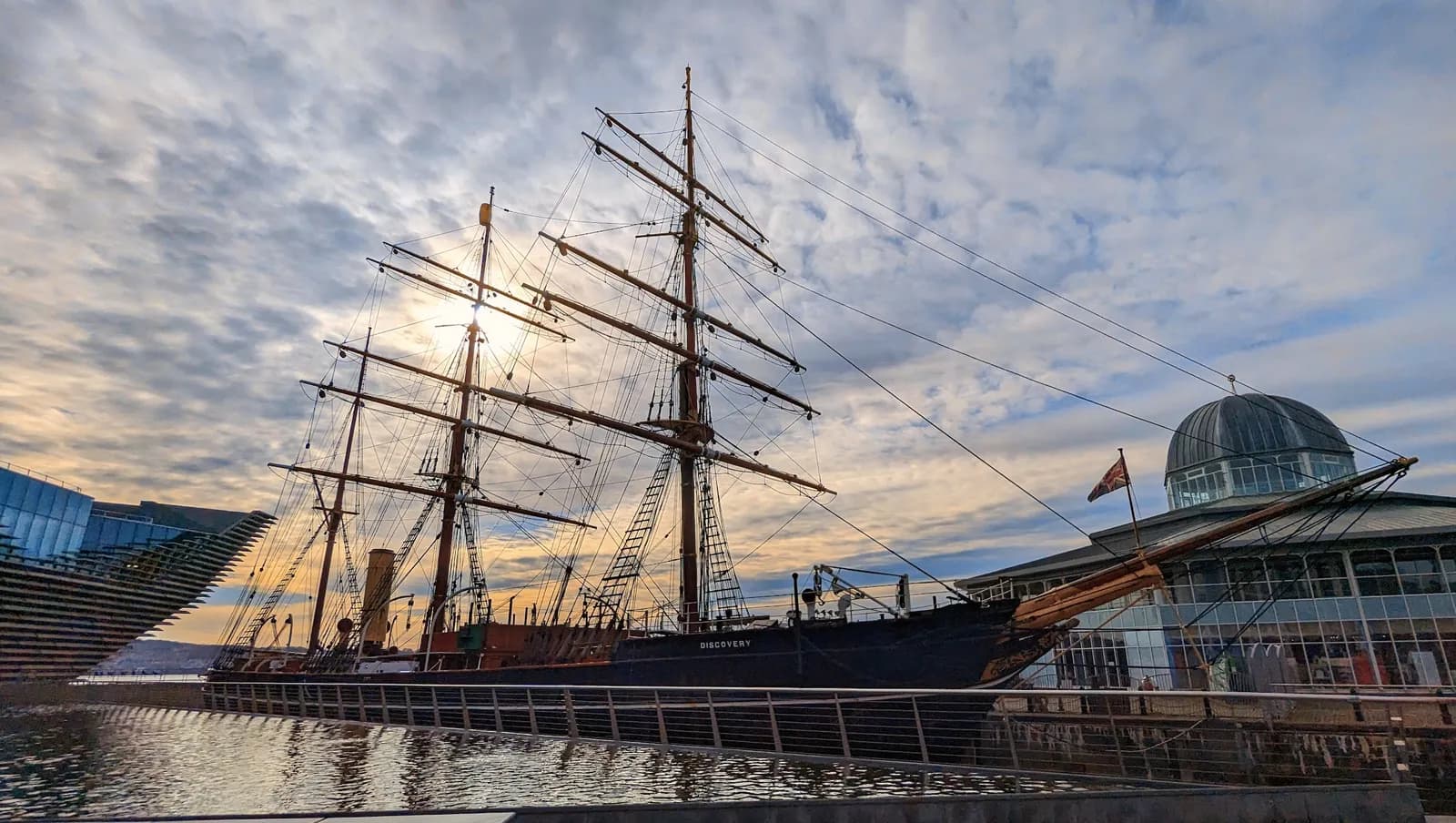
The magazine will explore the city's heritage sites: the RRS Discovery, built in Dundee in 1901 for Captain Scott's Antarctic expedition, now berthed at Discovery Point; The McManus, the Gothic Revival municipal museum and art gallery; Broughty Castle, the fifteenth-century fortress at Broughty Ferry; and Dundee Law, the 174-metre volcanic hill crowned with a war memorial.
It will report on local governance, holding Dundee City Council and the city's elected representatives to account. MPs Stephen Gethins and Chris Law, along with MSPs Joe FitzPatrick and Shona Robison, make decisions that affect daily life in Dundee. The magazine will scrutinise their voting records and policy positions.
Dundee Magazine will also celebrate what makes the city distinctive: the rivalry between Dundee FC and Dundee United; the Verdant Works museum preserving jute history; the Mills Observatory; and Dundee Contemporary Arts. It will give space to community groups, small businesses, and individuals whose stories rarely appear in national outlets.
The Road Ahead
Dundee's population peaked at 168,784 in the 1921 census. Today, with 149,880 residents, the city is growing again but faces challenges common to post-industrial urban centres: deprivation in certain wards, the cost of living crisis, housing pressures, and the need for sustainable employment.
This magazine will not gloss over these difficulties. It will investigate them with the same rigour applied to celebratory stories of cultural success. The aim is to provide Dundee residents with information they can trust, written by journalists who understand the local context.
The city has come a long way since the Tay Rail Bridge disaster of 28 December 1879, when the original bridge collapsed during a storm, killing 75 people. Dundee has rebuilt itself repeatedly, and it will do so again. Dundee Magazine intends to document that process, issue by issue, story by story.